

The Benefits of Robot Vacuums
Robot vacuum cleaners typically need less maintenance than traditional vacuums. They do need to be regularly emptied (and washed if the manufacturer says so) and cleaned to remove hairs from their brushes.
Models with smart mapping capabilities that allow you to see the map of your home and those that allow you to establish no-go zones are ideal. If you have pets, consider those that can distinguish between pet hair and other dirt.
They're more efficient
If you're someone who has little time to maintain and clean your home, then a robot vacuum is a great investment. They won't replace an upright or canister cleaner, but they can reduce the amount of dust and debris in your house. They also help to cut down on allergens and bacteria. They are quieter than traditional vacuums, however they still require some maintenance.
Many robotic vacuum cleaners include a filter which needs to be cleaned frequently. You'll also have to replace the batteries. Some models have HEPA filters which can reduce allergies and also capture smaller particles. These filters should be changed every 3 to 4 cycles, or as per the manufacturer's recommendations.
One of the most common fears people have about robot vacuums is the possibility that they will slide down the stairs or damage their walls and other furniture items. However, these worries are not valid since the majority of models can be programmed to stay out of specific areas of the home and are able to create virtual walls that prevent them from entering restricted zones.
The majority of robot vacuums have sensors that can detect the type of flooring and adjust the settings to suit. This lets them clean a variety of surfaces including wood, carpet and tile. They can even recognize barriers and stairs and automatically change direction if they come into contact to avoid damage.
The methodical back-andforth cleaning motion that robots rely on helps ensure that all nooks and crannies of your home are cleaned. Certain models can be used as robot mops. However my experience with the mopping capabilities of these machines has not been stellar.
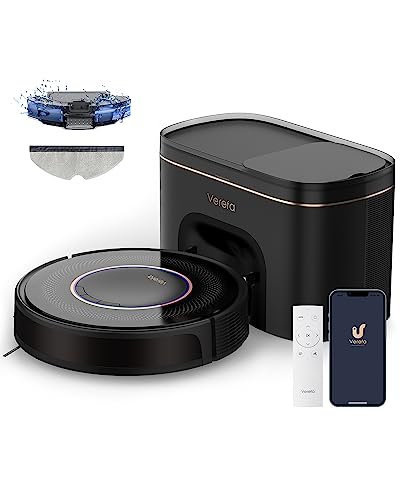
It's more practical
Robots can be operated independently and are cordless, in contrast to traditional vacuum cleaners, which require plugging in an the outlet. They're generally quiet, which means they won't wake you up in the early hours of the night, and many can even be scheduled to clean while you're away from your home.
The majority of robots take up less space in your home than a standard vacuum stick. They are easy to put under your bed or in the closet. You can even carry them around from room to room.
Certain robots come with self-emptying features and you won't have to empty the trash bins manually after each cleaning session. If you have a mop model, it usually comes with a large tank of water that lasts for a long time.
These machines make use of sensors to detect any changes in the floor surface and automatically adjust their settings to get the most effective results. This means that there is no requirement to pick between carpet, hardwood or tile, and lets them clean your entire house in a single session.
The back-and-forth movements they employ are similar to how people clean their rooms. This ensures that every corner and crevice is covered. Advanced models can also use cameras or lasers to generate real-time maps of your house so that they can navigate around furniture and other obstacles.
In addition, the majority of robots are able to recharge themselves and return to their charging base when they are due to be replenished. This allows you to be more productive on other things, or do things you enjoy in your spare time. You can control your smart home devices via apps for smartphones, since they are connected to Wi-Fi.
vacuum and mop combo to remember that robot vacuums are more expensive than stick vacuums, and do not come with the same warranty as conventional appliances. These machines typically only have a warranty of one or two years, which is not very long.
You can do a lot more with them
The attraction of a robotic vacuum cleaner is that it can do the cleaning with no interference from the user. You don't have to contend with a hose or cord, and they can be controlled with apps for smartphones or remote control. Some can even be programmed to get up and clean by themselves, so they're great for hands-free cleaning.
If you own an intelligent home device such as Amazon Alexa or Google Assistant, you can also control robot vacuums by voice commands. This can make it easier for those who are aging or otherwise limited in mobility to utilize their vacuums. Depending on the model you select, some robot vacuums also plot your floor plan and allow you to select certain rooms you'd like them to clean through the app or voice command.
Unlike canister, upright or handheld vacuums that have cords that need to be continually removed from the way or that get tangled in electrical wires, robots run on batteries and don't need to be physically connected and unplugged from room to room. They're generally quieter too with some operating at the same level of noise as a refrigerator that hums. This makes them ideal for homes with sensitive families, particularly those with pets or children who are afraid of traditional vacuums.
Another benefit of robot vacuums is that they generally require less maintenance than traditional machines. They don't have cords or hoses to manage They're also generally smaller and require less space to store. The majority of models come with a dirt bin or bag that needs to be emptied frequently, and the brush rollers need to be cleaned periodically. In general, however robots can only be effective when they're powered up and placed inside the room that they're supposed to clean.
Robot vacuum cleaners are not free of shortcomings. They are more expensive than other types of vacuums. They are also slower than conventional models when it comes to finishing their task. While most robots won't slide down the stairs or knock over your favorite decoration over, they are susceptible to clogging up and becoming stuck.
They're more expensive
Robots can be costly, especially when you select the most recent models with the latest features. If you're willing more, a high-end model could save you money over time. Budget robo-vacs, for example have dustbags with smaller brushes which need to be replaced more often than their more expensive counterparts. Over time, this can become a burden and increase the cost of ownership.
Furthermore, lower-end models tend to have lower warranties and are more likely to go rogue and break down than their higher-end counterparts. Another hidden cost is the need to replace motors and batteries or make repairs.
In contrast, premium models come with a range of advanced features that make them more efficient and comfortable to use than traditional vacuums. Robot vacuums are now equipped with features such as advanced navigation, automatic object recognition and mopping. The more expensive models will have a larger battery capacity as well as longer life span and higher quality materials.
While robot vacs are fantastic in general cleaning, they're not magic and, depending on the model you choose it could struggle to reach tight corners or clean textured floors. In these cases it is recommended that you have adult supervision and a thorough manual deep clean is required.
Aside from this, robot vacs are great at cleaning a variety of surfaces, including bare floors, hardwood floors, carpet and linoleum. The robot vacs are programmed using a smartphone app to clean at certain times. This is a great convenience for busy homeowners. But they're not the same as mop or vacuum and you must keep your home clean by sweeping and mopping periodically. A quality mop with microfiber pads and a bucket of water can ensure you get the best results from your robot vacuum.